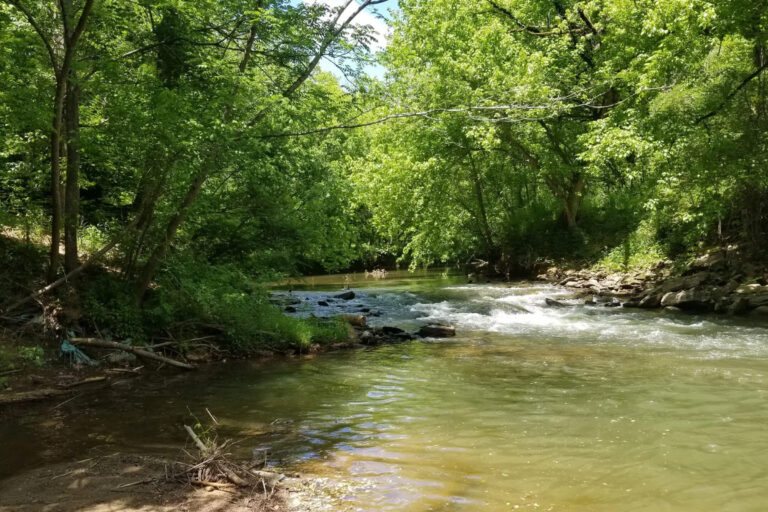
Flip over a rock in almost any healthy creek in North Georgia and you might find a small, armored surprise scuttling backward into the current. Crayfish (crawdads, mudbugs, crawfish, whatever you grew up calling them) are some of the most important animals in our streams. And two of the crayfish living in the Upper Etowah are rare enough that the state keeps a close eye on them.
A crayfish hot spot
The southeastern United States has more kinds of crayfish than anywhere else on the planet, and Georgia is right in the middle of it, with dozens of native species. Many live only in a single river system. The same rocky, spring-fed streams that make the Etowah home to rare darters have also given rise to crayfish found nowhere else.
Why crayfish matter
Crayfish are the cleanup crew and the grocery store of a stream:
- They recycle. Crayfish eat fallen leaves, dead plants and animals, and algae, turning them into food for the rest of the stream.
- They feed everyone else. Bass, sunfish, herons, raccoons, otters and snakes all depend on them.
- They shape the stream bed. By burrowing and moving gravel, they keep the spaces between stones open for insects and fish eggs.
- They’re an early warning system. Most crayfish need clean, well-oxygenated water and rocky bottoms. When they disappear, it’s often a sign that a stream is in trouble.
The Etowah crayfish
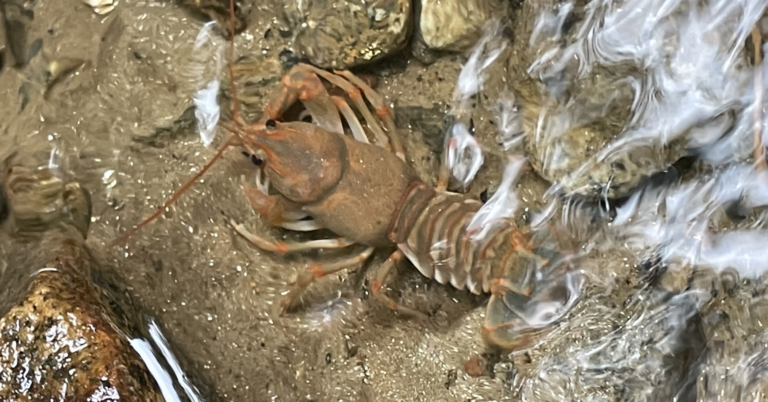
Etowah crayfish (Cambarus fasciatus)
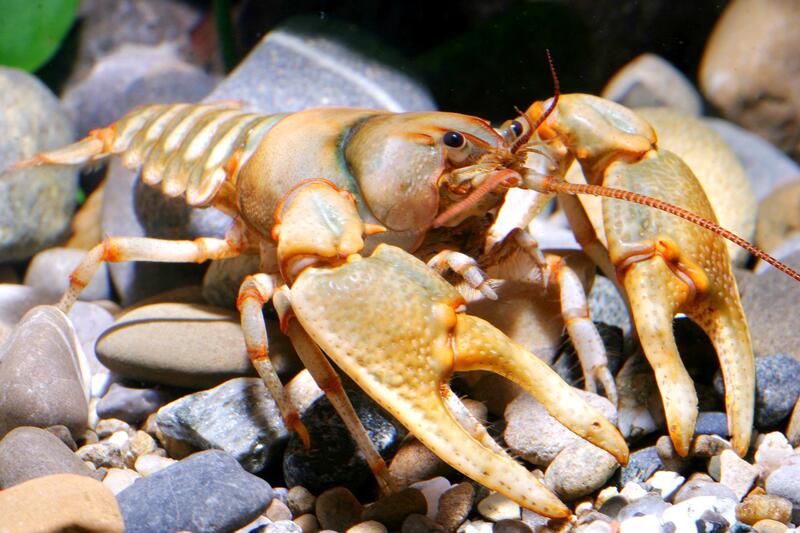
The Etowah crayfish lives only in Georgia, and almost entirely in the Etowah River system above Lake Allatoona — in other words, in our watershed. If it disappears from the Upper Etowah, it disappears from the world.
It makes its home under rocks in small and medium-sized streams with rocky bottoms. Where the bottom is sandier, it shelters under logs, leaf packs and whatever stones it can find.
Georgia lists the Etowah crayfish as Threatened under state law. It is also ranked vulnerable both worldwide and within Georgia, and it is a priority species in the state’s wildlife conservation plan.
The mountain crayfish
Mountain crayfish (Cambarus conasaugaensis)
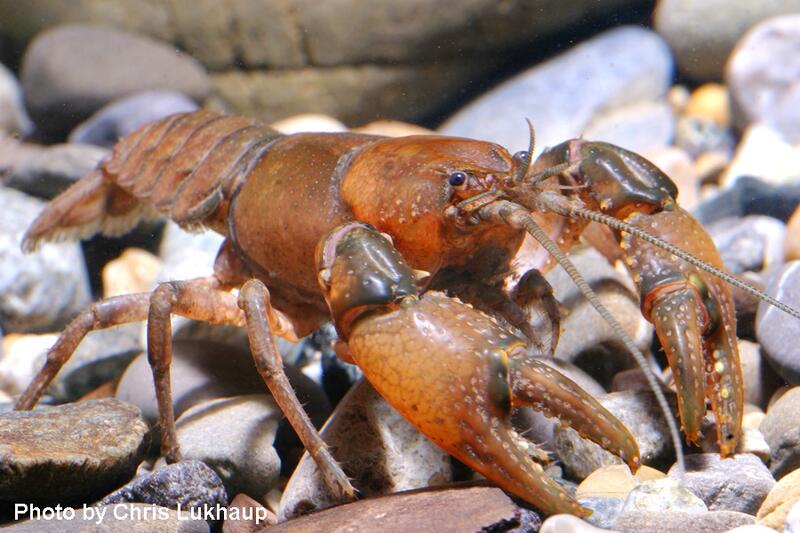
The mountain crayfish lives in the cold, clear headwaters of North Georgia’s mountains. It favors cascading mountain streams, rocky stretches of medium-sized rivers, and seepage areas where groundwater trickles out of hillsides. Scientists first described it from a small, cascading tributary of the Conasauga River in a wooded ravine near Chatsworth.
Like the Etowah crayfish, it is ranked vulnerable worldwide and in Georgia, and the state considers it a species of moderate conservation concern.
What the ranks mean
Scientists use a simple scale to describe how secure a species is. “G” means its status worldwide, and “S” means its status in one state.
| Rank | Meaning |
|---|---|
| 1 | Critically imperiled — at very high risk of disappearing |
| 2 | Imperiled — at high risk |
| 3 | Vulnerable — at moderate risk, often because it lives in a small area |
| 4 | Apparently secure |
| 5 | Secure — common and widespread |
Both of our crayfish are G3 and S3: vulnerable everywhere they live. That’s not an emergency, but it means a handful of bad changes to their streams could push them toward real trouble.
What threatens them
The biggest threats to the Upper Etowah’s crayfish are the same ones facing our darters:
- Sediment. Mud from construction sites, eroding banks and cleared land fills the gaps under rocks where crayfish hide and raise their young.
- Lost stream buffers. Without trees and plants along the banks, streams get warmer, muddier and more prone to flooding.
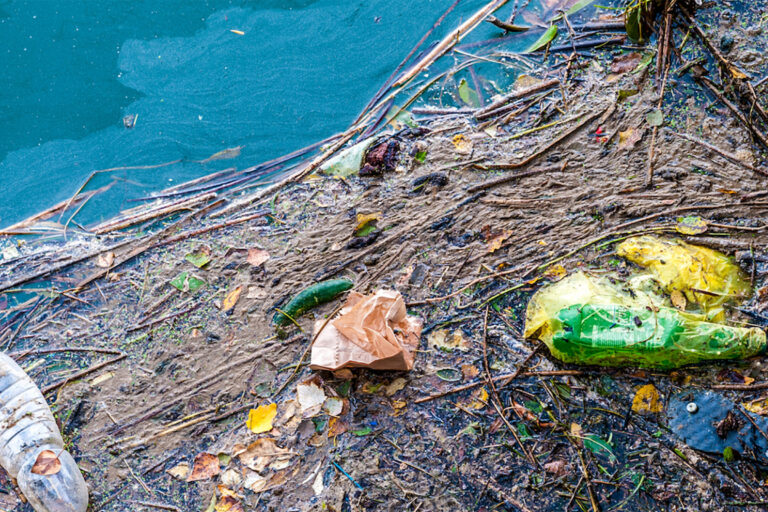
- Polluted runoff. Fertilizer, chemicals and other nonpoint source pollution wash in with every storm.
- Non-native crayfish. Crayfish dumped from bait buckets can outcompete native species and carry disease.
- Drought and development. As the region grows, streams face more pavement, more runoff and lower flows in dry years.
How you can help
- Never release bait. Don’t dump crayfish, minnows or other bait into a stream or lake. Throw unused bait in the trash.
- Put rocks back. If you flip a rock to look for crayfish, set it back gently the way you found it — it’s someone’s home.
- Protect stream banks. Let plants grow along creeks on your property. Stream buffers are one of the best protections our crayfish have.
- Report muddy water. If you see sediment pouring off a construction site into a creek, report it.
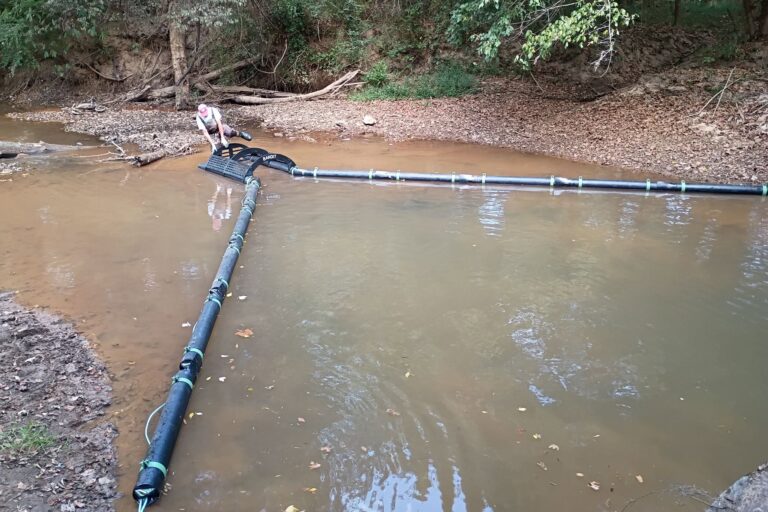
- Help us keep watch. Our volunteers monitor stream health across the Upper Etowah. Join us and see these animals for yourself.
The Etowah crayfish has been here far longer than any of us. With clean water and healthy streams, it can stay for generations to come. Learn more about the other rare animals of our river: meet the darters.