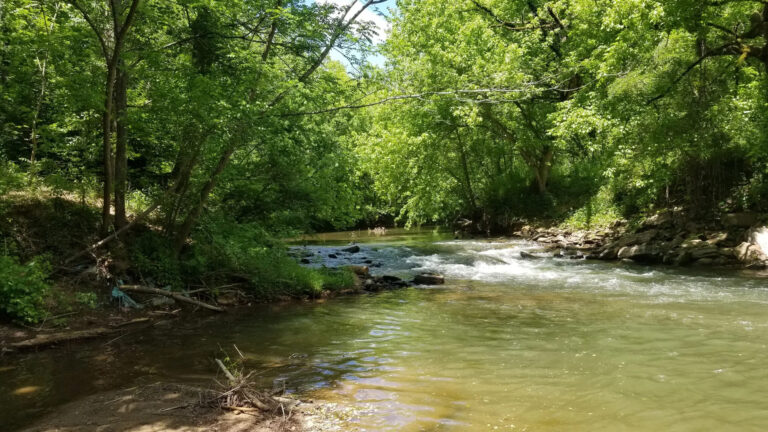
Walk along almost any healthy creek in North Georgia and you’ll notice it’s lined with trees, shrubs and tall grasses. That strip of green isn’t just pretty. It’s called a stream buffer, and it does more to keep our water clean than almost anything else we can do on land.
Here’s what a stream buffer is, how it protects the Upper Etowah River, and how you can help keep the buffers in your neighborhood healthy.
What is a stream buffer?
A stream buffer (also called a riparian buffer) is the strip of natural vegetation along the banks of a creek, stream or river. A good buffer has layers: tall trees for shade, shrubs in the middle, and grasses, ferns and ground cover close to the water.
Every stream in the Upper Etowah drains a larger area of land around it — its watershed. When rain falls on lawns, roads, parking lots and construction sites, it flows downhill toward the nearest creek. The buffer is the last line of defense before that water reaches the stream.
How buffers protect our water
They trap sediment. Mud and soil washing off bare ground is one of the most common pollutants in Georgia’s streams. Plants slow runoff down, and their roots and leaf litter catch the soil before it reaches the water. Less sediment means clearer water and healthier stream beds.
They filter out pollutants. Runoff carries fertilizer, pet waste, oil from driveways and roads, and bacteria. Buffer plants and soil absorb and break down much of it. Nutrients like nitrogen and phosphorus that would feed algae blooms in the river feed the buffer instead.
They hold the banks together. Roots are natural rebar. Without them, creek banks erode with every storm, collapsing into the water and carrying away yards, trees and sometimes structures with them.
They keep water cool. Shade from trees keeps stream temperatures down in the summer. Cool water holds more oxygen, which fish and the insects they eat need to survive.
They soak up floodwater. Buffers act like a sponge, slowing water down and letting it soak into the ground instead of rushing downstream all at once. That means fewer flash floods and steadier flows during dry spells.
They give wildlife a home. Buffers are corridors for birds, deer, salamanders, turtles and pollinators. Leaves and branches that fall into the creek feed the insects at the base of the stream’s food web.
Why buffers matter so much for darters
The Upper Etowah is home to fish found nowhere else in the world, including the endangered Etowah darter and the threatened Cherokee darter. These small fish live and lay their eggs in clean gravel on the stream bottom.
Sediment is their biggest threat. When mud settles into the gaps between stones, it smothers eggs and buries the insects darters eat. A healthy buffer is one of the best protections they have. Meet the darters to learn more about these remarkable fish.
What Georgia law says
Georgia requires a buffer of at least 25 feet along most streams and rivers, measured from the point where vegetation has been wrested by normal stream flow. Trout streams require 50 feet. Many counties and cities in our area set wider buffers, so the rules where you live may be stricter than the state’s.
Work inside a buffer, such as clearing, grading or building, usually requires a permit or variance. If you’re not sure what applies to your property, contact your county’s planning or engineering office. Our Who to Call page lists the right number for each county.
What you can do
If you live on or near a creek, small changes make a big difference:
- Let it grow. Stop mowing at least a few feet back from the bank, and let the strip next to the water grow naturally.
- Plant natives. Trees like river birch and sycamore, shrubs like buttonbush, ninebark and Virginia sweetspire, and grasses like switchgrass all thrive along Georgia streams and hold banks in place.
- Leave the leaves. Fallen leaves and branches along the bank protect the soil and feed the stream.
- Keep yard waste out of the creek. Grass clippings and leaf piles dumped on banks smother plants and add nutrients to the water.
- Go easy on fertilizer and pesticides, especially near the water, and never apply them before a forecast rain.
- Pick up after pets. Pet waste is a major source of bacteria in our streams.
If you see a buffer being cleared, or mud pouring off a construction site into a creek, report it. We’ll help make sure the right agency follows up.
Protecting the Upper Etowah, one stream bank at a time
Every creek in our watershed eventually flows into the Etowah River, and every healthy buffer along the way helps keep it clean. Whether you own creekside property or just care about clean water, you can help.
Volunteer with us at a stream cleanup or planting day, or become a member to support our work protecting the Upper Etowah.