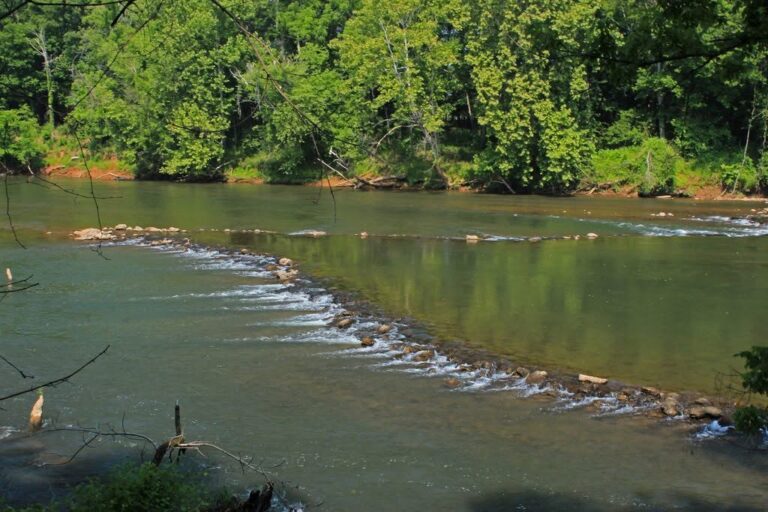
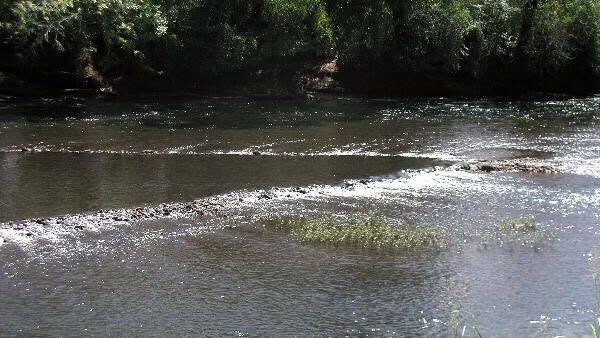
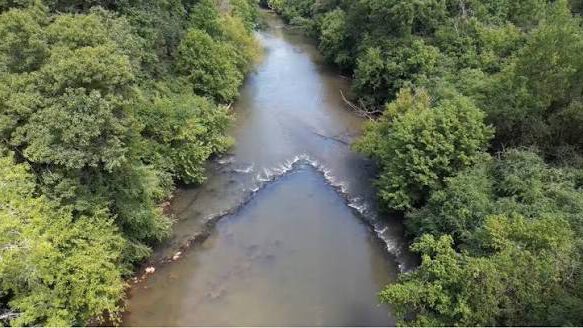
If you’ve ever paddled or waded along the Etowah River when the water level is low, you might have noticed strange, distinct V-shaped patterns of rocks dynamic against the current. They aren’t natural river formations, nor are they random piles of river stone.
These are ancient fish weirs—ingenious traps built hundreds of years ago that still rest in the riverbeds of North Georgia today.
What Are Fish Weirs?
Long before modern rods, reels, or synthetic nets existed, Native American tribes—specifically ancestors of the Cherokee and Muscogee (Creek) nations—needed an efficient, community-wide method to harvest food.
To accomplish this, they built stone walls directly into the river channel:
- Dry-Stacked Stone Construction: Built entirely without mortar, heavy river rocks were strategically stacked to withstand the river’s steady current.
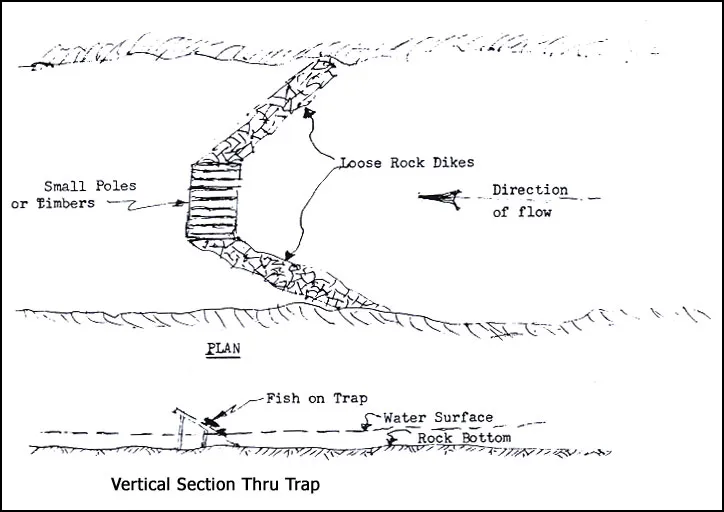
- The V-Shape Orientation: The walls form a wide funnel pointing downstream. The wide mouth faces upstream to catch fish moving with the flow, directing them down toward the narrow point (the “apex”).
How the Harvest Worked
Catching fish with a weir was a collaborative event that required perfect timing, teamwork, and an intimate understanding of river ecology.
- Low-Water Timing: Harvesting occurred when water levels dropped enough for the top of the stone walls to sit just above the surface.
- The Drive: Community members would enter the river upstream from the weir, forming a wide semicircle. Splashing, wading, and beating the water, they scared schools of fish downstream toward the trap.
- The Trap at the Apex: At the narrow downstream opening, harvesters waited with woven cane baskets or traps to scoop up the funnelled fish as they tried to pass through.
Sustainable Practice: Unlike modern commercial fishing, these traps were used selectively. Villages took only what was needed to feed their people, leaving the ecosystem intact for future seasons.
Enduring Legacy on the Etowah
These fish weirs have endured for hundreds of years against floods, changing currents, and modern development. Across the Southeast, dozens of these historical sites remain visible along river stretches like the Etowah.
Later European settlers recognized the brilliance of these engineering feats and adapted several of them—sometimes adding wooden mill structures to generate mechanical power or enhancing the stone funnels for their own fish traps.
Next time you look out over the river on a clear, low-water day, keep an eye out for those subtle V-shaped ripples in the current. You might just be looking at one of North America’s oldest surviving agricultural structures.