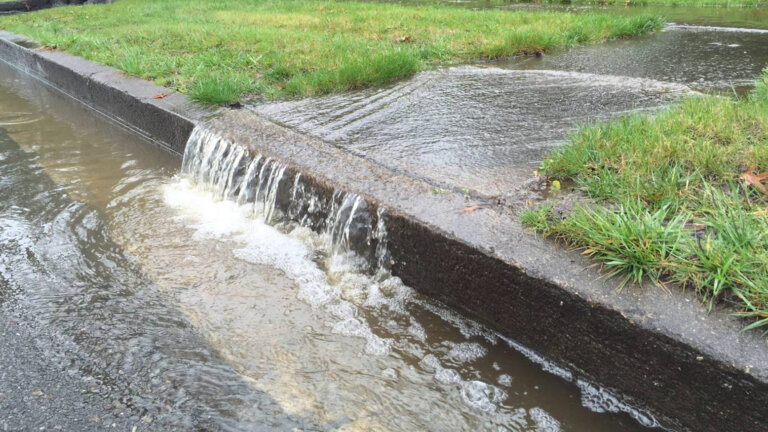
When it rains, water that doesn’t soak into the ground runs off roofs, driveways, and lawns, and it doesn’t stay clean for long. Along the way it picks up fertilizer, pet waste, oil, soil, and litter, then carries it into storm drains and straight to local creeks. This is nonpoint source pollution, and the good news is that every property owner can help reduce it.
How much water are we talking about?
An inch of rain falling on a 1,000-square-foot roof produces roughly 600 gallons of water. Multiply that by every house on your street, and it’s easy to see why streams rise so fast after a storm, and why that rush of water erodes banks and muddies the river.
Slow it down and soak it in
Redirect your downspouts
If your downspouts empty onto a driveway or sidewalk, the water goes straight to the street. Point them toward a lawn, garden bed, or other area where water can soak in, keeping it away from your foundation.
Install a rain barrel
A rain barrel under a downspout catches water you can use later for gardens and potted plants. Choose one with a screened lid to keep out mosquitoes and debris, and empty it between storms so it’s ready for the next one. Georgia Adopt-A-Stream has a guide to building and installing your own, and UGA Extension notes that just 250 square feet of roof can fill a 50-gallon barrel in under two hours of moderate rain.
Plant a rain garden
A rain garden is a shallow, planted low spot that catches runoff and lets it soak into the ground over a day or two. Native plants with deep roots work best. Place it downhill from your house and at least 10 feet from the foundation. Before you dig, contact Georgia 811 (or just call 811) to have underground utilities marked for free. UGA Extension’s Rain Gardens in Home Landscapes walks through siting, sizing, and plant choices step by step.
Keep more of your yard green
Lawns, mulched beds, and especially trees and shrubs absorb far more water than pavement. When replacing a patio or walkway, consider permeable pavers or gravel that let water through. The EPA’s Soak Up the Rain program has more ideas for every size of yard.
Is it legal to collect rainwater in Georgia?
Yes. Georgia has no state ban on collecting rainwater, and a rain barrel for watering your yard and garden doesn’t need a state permit. A few rules apply:
- Outdoor use is the easy part. Georgia’s plumbing code specifically says nothing in it restricts using rainwater for outdoor irrigation.
- Indoor use needs a permitted system. Rainwater can be plumbed indoors to flush toilets or run a clothes washer, but the system must meet the state plumbing code’s rainwater harvesting requirements, including filtration, disinfection, backflow protection, and purple-labeled non-potable pipes. Talk to a licensed plumber and your local building department first. (EPA summary of Georgia’s rules)
- Not for drinking. Georgia’s plumbing code does not allow harvested rainwater for drinking, cooking, or other potable uses.
- Local rules can be stricter. Your city, county, or HOA may have its own requirements for barrel placement, screening, or appearance, so check before you install.
- Keep it covered. Standing water breeds mosquitoes. A tight lid or fine mesh screen over every opening is a must, and some local governments require it.
Georgia’s outdoor watering schedule (allowed between 4 p.m. and 10 a.m.) applies to water from public water systems. Using rain you’ve collected yourself is one of the easiest ways to conserve water. If you’re unsure whether a local restriction applies, check with your water provider.
Keep pollution out of the runoff
- Go easy on fertilizer. Use only what your lawn needs, never apply it before heavy rain, and sweep any that lands on pavement back onto the grass.
- Pick up after pets. Pet waste carries bacteria that wash into streams with the next rain.
- Fix leaks. Oil and fluids that drip from vehicles wash off driveways into storm drains.
- Never dump anything down a storm drain. Paint, grass clippings, and soapy wash water all end up in the creek. If you see someone dumping, report it.
- Cover bare soil. Mulch or plant bare patches so soil doesn’t wash away.
Live on a creek?
If a stream runs through or along your property, the strip of land beside it is the most important place to act. Letting native plants grow along the bank, instead of mowing to the water’s edge, protects your land from erosion and filters runoff before it reaches the stream. Learn how stream buffers work.
Small steps, big difference
No single yard fixes a river, but every property that slows down and cleans its runoff adds up across tlows to the Etowah. Want to do more? Volunteer with UERA and help protect the Upper Etowah.