Canton’s first public sculpture isn’t a statesman or a soldier. It’s a fish barely two inches long that lives nowhere on Earth but the Etowah River system.
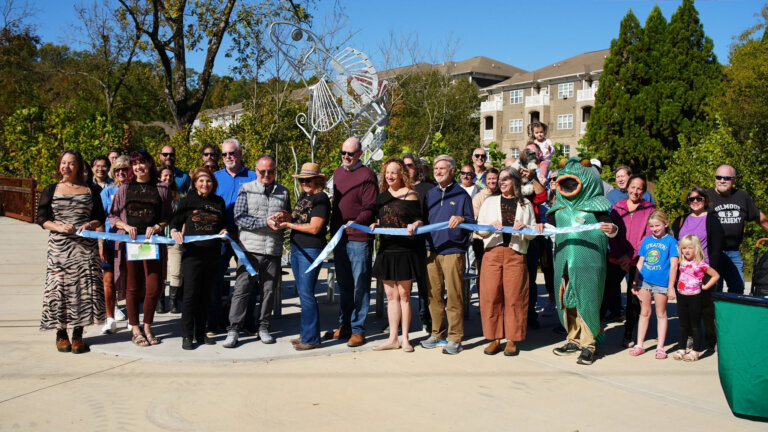
Currents of Canton, by artist Huelani Mei, was unveiled on Friday, October 23, 2026, with a ribbon-cutting at the western gateway of Heritage Park, a stone’s throw from the river its subject calls home. It is the first sculpture installed by the Canton Cultural Arts Commission (CCAC), and it was paid for entirely by a private donation.
For those of us who care about the Etowah, this Etowah darter sculpture marks a remarkable moment: a city choosing to put one of the river’s rarest residents front and center.
Meet the Etowah darter
The Etowah darter (Etheostoma etowahae) has been on the federal endangered species list since December 20, 1994. Adults measure just 1.6 to 2.2 inches, according to the U.S. Fish & Wildlife Service.
At a glance it’s a modest brown or grayish-olive fish with a row of 13 or 14 small dark blotches along its side. In breeding season, males show off a dark greenish-blue breast, a bluish-green wash on the gill cover, and a red edge on the front dorsal fin.
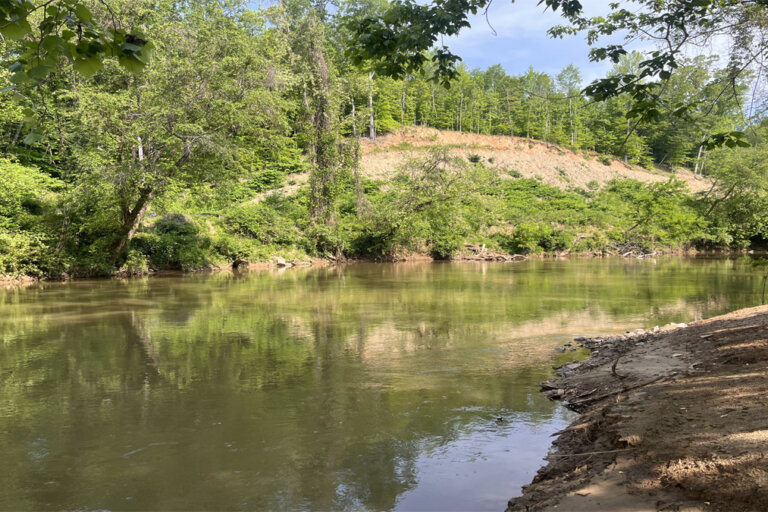
The darter lives mainly in the upper Etowah watershed above Lake Allatoona. It needs fast, clear, shallow riffles over clean gravel, cobble, and small boulders, and it disappears from silted-in or dammed-up stretches. That makes it a living gauge of river health: where the darter thrives, the water is clean.
It isn’t alone. The Etowah basin also shelters the federally endangered amber darter, the federally threatened Cherokee darter, and the state-endangered holiday darter and Etowah bridled darter. Few rivers in North America hold this many rare fish in one place. Meet the darters of the Upper Etowah.
An eight-foot darter in woven steel
The darter in Currents of Canton stands about 8 feet tall, roughly 50 times life size. Mei built it from woven metal dowels in the artist’s signature line style, adding sheet-metal fins, scales, and eyes for emphasis and durability.

The fish swims through abstracted “water” scrolls made of solid metal dowels an inch or more thick. Native aquatic plants from the Etowah ecosystem are worked into the water-inspired pedestal. The whole piece carries a hot-dipped galvanized finish, a nod to Canton’s industrial past and a practical choice for a sculpture that sits in the river’s floodplain.
“Embedded in the Etowah River system, Currents of Canton transforms the locally endangered Etowah darter into an iconic sculpture of movement and connection. By celebrating a species found nowhere else on earth, this sculpture becomes a defining placement at Heritage Park reflecting Canton’s history, environment, and community.”
— Huelani Mei, artist
The design also honors the Cherokee people who lived along the Etowah. Like the darter, the city notes, they endured great challenges, and the piece is meant as a bridge between past and future.
The CCAC chose Mei’s design unanimously after a call for sculptors that ran from September 22 to October 24, 2025. “Huelani Mei sets the bar for future sculpture installations,” said CCAC Chairperson Shanna Coulter, “and we are grateful to the City of Canton for prioritizing public art.” The piece is the first under the Public Art Master Plan the City Council adopted in July 2023.
Why a fish matters to a city
A two-inch fish rarely gets a monument. But the Etowah darter’s survival depends on the same things Canton depends on: clean water, healthy creeks, and land that doesn’t wash into the river with every storm. Sediment, polluted runoff, altered flows, and dams are the darter’s biggest threats, and every one of them traces back to how we build and live along the river.
An eight-foot darter at the city’s front door is a daily reminder that the Etowah is home to something found nowhere else. As Mei put it, the hope is that the sculpture “raises awareness, celebrates natural and cultural history, and invites viewers to reflect on the connection between the past, present, and future.”
Go see it
Currents of Canton stands at the western edge of Heritage Park, next to the Waleska Street Bridge. Park at the Heritage Park entrance beside the G. Cecil Pruett YMCA. While you’re there, walk down to the water: the real darters are just a few feet away.
Help the real darter
- Plant native vegetation along streambanks to hold soil in place.
- See muddy runoff from a construction site? Report a problem or check who to call.
- Keep fertilizer, oil, and pet waste out of storm drains.
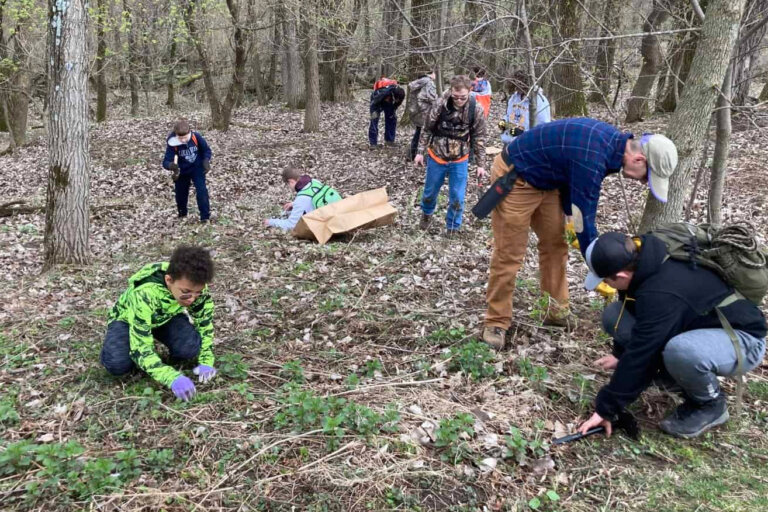
- Join an upcoming river cleanup or event, or volunteer with our water monitoring program.
- Become a member or donate to support the Upper Etowah River Alliance.
Keep reading
- Meet the Darters
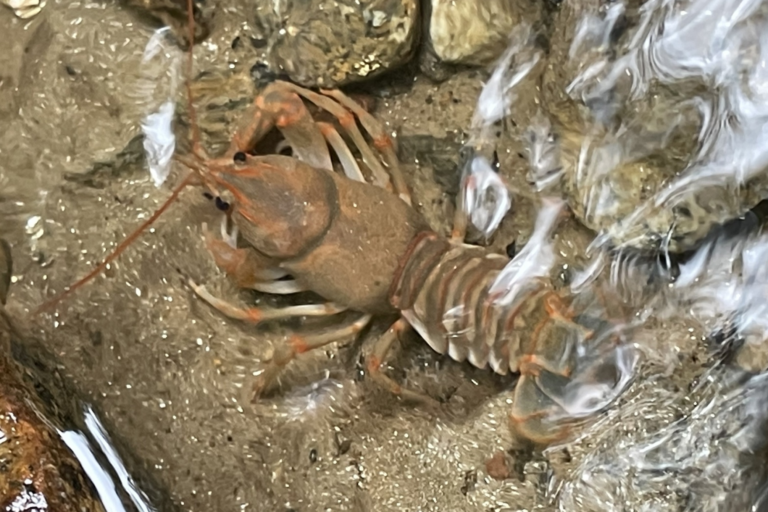
- Meet the Crayfish of the Upper Etowah
- What Is a Watershed?
- Forever Chemicals in Georgia’s Rivers
- Murals and public art in Canton (Explore Canton)
Sources
- Canton’s First Public Sculpture Is a Fish That Lives Only in the River Beside It, Sterling Realty Partners
- City of Canton news release and Facebook announcement
- Etowah darter species profile, U.S. Fish & Wildlife Service