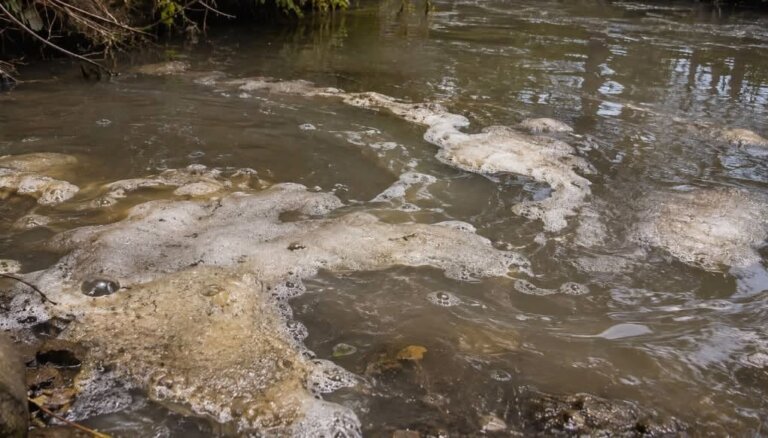
On Thursday, November 5, 2026, about 35,560 gallons of untreated sewage spilled into Owl Creek in Woodstock after a power failure knocked out part of the Cherokee County Water & Sewerage Authority’s (CCWSA) wastewater system. The spill happened near 1047 Ashfern Walk.
That’s roughly 711 bathtubs’ worth of wastewater. Because the spill was over 10,000 gallons, Georgia counts it as a “major spill,” which triggers extra public notice and water testing under Georgia Environmental Protection Division (EPD) rules. The news was first reported locally by Eye on Cherokee.
Here’s what we know, what we don’t know yet, and what you can do.
What happened
According to CCWSA’s public notice, the overflow was caused by a power failure. Sewer systems rely on pumps to move wastewater uphill and toward the treatment plant. When the power goes out and backup power doesn’t kick in, wastewater can back up and overflow from manholes or pump stations into the nearest creek.
CCWSA reports that electrical service has been restored and that a problem with the backup electrical system has been fixed. The notice didn’t say how long the overflow lasted.
Why sewage in a creek matters
Raw sewage carries bacteria, viruses, and other germs that can make people and pets sick. Scientists track it using E. coli, a type of bacteria that lives in the gut. High E. coli counts in a stream are a warning sign that sewage or animal waste is present.
Sewage hurts the creek, too. As it breaks down, it uses up the dissolved oxygen that fish, crayfish, and aquatic insects need to breathe. It also adds nutrients that can feed algae. A healthy creek can recover from a one-time spill, but it takes time, and repeated spills add up.
Is it safe to be near Owl Creek?
At the time of writing, CCWSA hadn’t published any test results for Owl Creek, and we haven’t seen any official advisory or closure. A lack of data isn’t the same as a clean result. Until test results are available, we recommend that you:
- Stay out of the water. Don’t wade, swim, or let kids play in Owl Creek or its banks downstream of the Ashfern Walk area.
- Keep pets out. Dogs love creeks, and they’re often the first to get sick.
- Wash up. If you or your pet do touch the water, wash with soap and clean water.
- Watch for signs posted along the creek, and follow them.
Update from CCWSA
Monitoring of the spill started on the day of the spill (11/5/26 – 7:02 pm). All reporting to the GA EPD, media, health department and downstream users was complete by 11/5/26. Monitoring for dissolved oxygen, water temperature, pH, conductivity and fecal coliform (bacteria) has continued every day since and will continue from a week of the spill date. Monitoring will then once a week for the rest of the month. Followed by a 3-month check (once a week for a month) and a 1 year check (once a week for a month).
Our current dissolved oxygen, pH, temperature and conductivity numbers are in a healthy range. The fecal coliform (bacteria) numbers are down. There is a difference of 273.2 cfu/100 mL between upstream and downstream. The goal is for upstream and downstream numbers to be similar. Georgia EPD will be assessing a fine and the pump station will be monitored closely.
What about my drinking water?
This spill doesn’t mean your tap water is unsafe. CCWSA draws its drinking water from the Etowah River near Ball Ground, upstream of Woodstock, and treats it to remove harmful bacteria before it reaches your home. If you have a private well near the creek and have concerns, contact the Cherokee County Environmental Health office about testing.
What happens next
Under Georgia’s rules for major spills, the utility must test the creek upstream and downstream of the spill site. Testing usually includes bacteria, dissolved oxygen, temperature, pH, and conductivity, and continues after the spill to track how the creek recovers. EPD keeps records of reported sewage spills across the state.
Some questions are still open:
- What do the water tests show, and when will results be shared with the public?
- How long did the overflow last?
- Was any cleanup needed along the creek?
- What will keep backup power from failing next time?
We’ll share updates as we learn more. You can also contact CCWSA directly at (770) 479-1813.
What about the Upper Etowah?
Owl Creek is a small creek in a busy part of Cherokee County, but every creek eventually flows into the Etowah. Lake Allatoona supplies drinking water to Cobb County and Cartersville, and it’s a favorite spot for boating, fishing, and swimming. What happens in a Woodstock neighborhood creek doesn’t stay there.
Spills like this one are also a reminder of how much our watershed depends on infrastructure most of us never think about. As Cherokee County keeps growing, so does the network of pipes and pump stations carrying wastewater, and so does the importance of reliable backup power.
How UERA helps
Our volunteer water monitoring program trains neighbors to test local streams through Georgia Adopt-A-Stream, including for E. coli bacteria. In 2025, 12 monitoring groups tested 51 sites across the watershed. Regular testing gives us a baseline, so when something like this happens, we can tell what “normal” looks like for a creek and how quickly it bounces back.
How you can help
- Report what you see. If you notice sewage odors, gray or cloudy water, toilet paper or debris, or dead fish in any creek, call the Georgia EPD 24-hour spill line at (800) 241-4113, then let us know. For an overflowing manhole, call CCWSA at (770) 479-1813. Our Who to Call page lists more contacts.
- Mind your own pipes. Fats, oils, grease, and “flushable” wipes clog sewer lines and cause overflows. Wipe greasy pans with a paper towel and put wipes in the trash.
- Become a stream monitor. Want to keep an eye on a creek near you? Volunteer and we’ll train you.
- Support clean water. Become a member or donate to keep our monitoring program going.
Live near Owl Creek? If you’ve noticed odors, discolored water, or warning signs since Thursday, please report it. Your eyes on the creek help.
Sources
- Cherokee County Water & Sewerage Authority, public notice of major sewage spill, November 5, 2026. CCWSA Public Notice.
- Eye on Cherokee, “More Than 35,000 Gallons of Sewage Spill Into Owl Creek in Woodstock Following Power Failure.”
- Georgia Environmental Protection Division, sewage spill reporting requirements.
- CCWSA Water Quality Report (drinking water source).