A new report released October 20, 2026 found PFAS, the so-called “forever chemicals,” at every one of the 20 Georgia waterway sites tested. The report, PFAS in America’s Rivers and Lakes from the Environment Georgia Research & Policy Center and Frontier Group, detected as many as 17 different PFAS compounds at Georgia sites sampled between 2022 and 2024.
The news has been widely covered by CBS News Atlanta, FOX 5 Atlanta, Atlanta News First, and WSB-TV, and it’s sparked plenty of conversation online. Here’s what the findings mean for the Upper Etowah, and what you can do.
What Are PFAS?
PFAS (per- and polyfluoroalkyl substances) are a family of thousands of synthetic chemicals used since the 1940s to make products resist water, grease, and stains: nonstick cookware, waterproof clothing, stain-resistant carpet, food packaging, and some firefighting foams. They’re called “forever chemicals” because they barely break down in the environment or in our bodies.
The U.S. EPA links exposure to certain PFAS with health effects including some cancers, liver and immune system effects, and developmental effects in infants and children.
How PFAS Get Into Rivers
According to the report, PFAS reach waterways through:
- Industrial discharges, directly or through sewer systems
- Wastewater treatment plants, which aren’t designed to remove PFAS
- Firefighting foam used at airports, military bases, and training sites
- Sewage sludge (biosolids) spread on farmland as fertilizer, which can wash into streams
Once PFAS are in a river, they don’t leave. They build up in fish and wildlife. As Atlanta Fly Fishing Club president Mike Greenman told FOX 5, PFAS bind to the protein in fish muscle, so there’s no way to cut, skin, or cook them out.
What About the Upper Etowah?
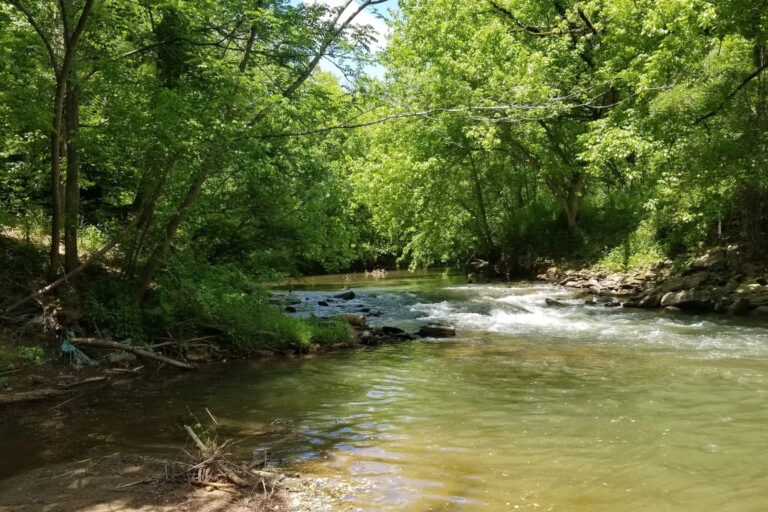
The news coverage named only a few of the 20 Georgia sites, including the Chattahoochee River and the Conasauga River near Dalton. The Conasauga matters to us: it’s part of the same Coosa River basin as the Etowah, and north Georgia’s carpet industry has made the basin a focus of PFAS concern for years. That’s why Georgia EPD started its own drinking water PFAS sampling in the Coosa basin.
As the report’s authors point out, many waterways simply haven’t been tested, and Environment Georgia’s Jennette Gayer called the findings “probably the tip of the toxic iceberg.” A lack of data isn’t the same as a clean result.
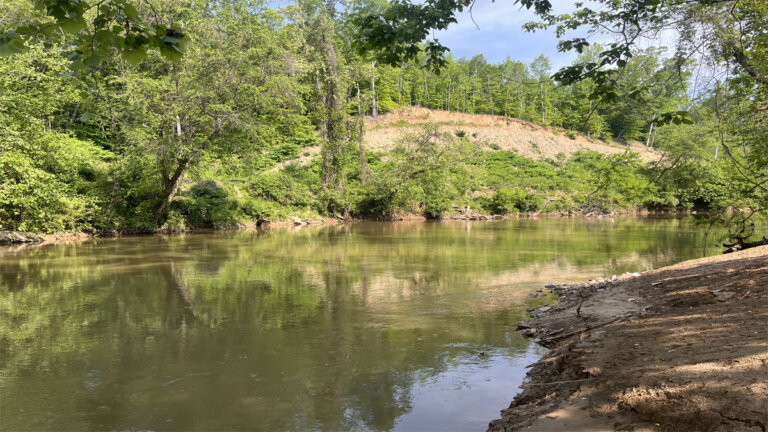
That matters here because the Upper Etowah is a drinking water source. The Cherokee County Water & Sewerage Authority and the City of Canton draw water from the Etowah, and Lake Allatoona supplies the Cobb County-Marietta Water Authority and Cartersville. Our watershed has wastewater plants, growing development, and farmland, all potential PFAS pathways.
Where the Rules Stand
In 2024, EPA set the first national drinking water limits for PFAS, including 4 parts per trillion each for PFOA and PFOS, two of the most studied compounds. Public water systems must finish initial testing by 2027 and meet the limits by 2029.
In May 2026, EPA proposed rescinding the limits for four other PFAS and proposed letting some systems take until 2031 to meet the PFOA and PFOS limits, which it plans to keep. Both proposals were still pending at the time of writing.
There are no national limits on PFAS in rivers and lakes themselves, and there are currently no drinking water advisories tied to this report.
How to Find Out What’s in Your Water
- On public water? Read your utility’s annual Water Quality Report (also called a Consumer Confidence Report). Water systems must report PFAS results there. You can also explore EPA’s nationwide PFAS testing data and Georgia EPD’s PFAS sampling results.
- On a private well? No one tests it but you. Use a certified laboratory that analyzes drinking water for PFAS using EPA Method 533 or 537.1. Home test strips won’t detect PFAS at the levels that matter.
- Ask questions. Call your water provider and ask whether they’ve tested for PFAS, what they found, and what their plan is to meet EPA’s limits.
How to Reduce Your Exposure
- Filter your drinking water. Reverse osmosis and activated carbon filters can remove PFAS, but only if they’re certified to do it. Look for certification to NSF/ANSI Standard 53 or 58 for PFOA and PFOS reduction. EPA explains how to identify a certified filter. Change filters on schedule.
- Choose PFAS-free products when you can, especially cookware, rain gear, and stain-resistant treatments. EPA has more practical steps to reduce your risk.
- Be thoughtful about fish. If you eat fish you catch, follow Georgia DNR’s fish consumption guidelines, and watch for updates as more PFAS data becomes available.
How to Keep PFAS Out of the River
- Don’t pour chemicals down the drain. Take paints, stain repellents, and other household chemicals to a household hazardous waste collection event.
- Support source control. The report calls for phasing out nonessential PFAS uses, requiring industries to disclose PFAS they send to treatment plants, and ending the spreading of PFAS-contaminated sludge on farmland. Advocates are urging Georgia lawmakers to pass the Forever Chemicals Transparency Act in the next legislative session.
- Speak up locally. Ask your county commission and water authority how they’re preparing for PFAS limits and whether biosolids are applied to land in your area.
- Protect the whole watershed. Healthy stream buffers and less polluted runoff won’t remove PFAS, but they reduce the many other pressures our rivers face and keep them more resilient.
What UERA Is Doing
Our volunteer water monitoring program tracks the health of Upper Etowah streams, but PFAS can only be measured with specialized laboratory testing. The UERA partners with local water quality experts for additional testing, analysis, and data sharing. If you have any questions, please email us at info@etowahriver.org.
Want to help? Volunteer, become a member, or donate to support clean water in the Upper Etowah. And if you see something wrong on the water, report it.